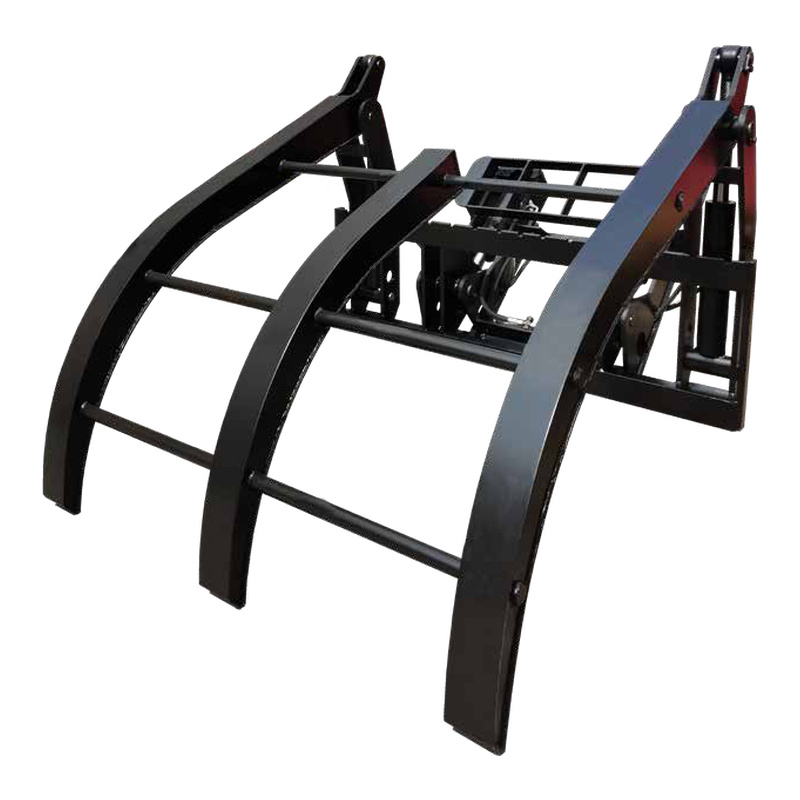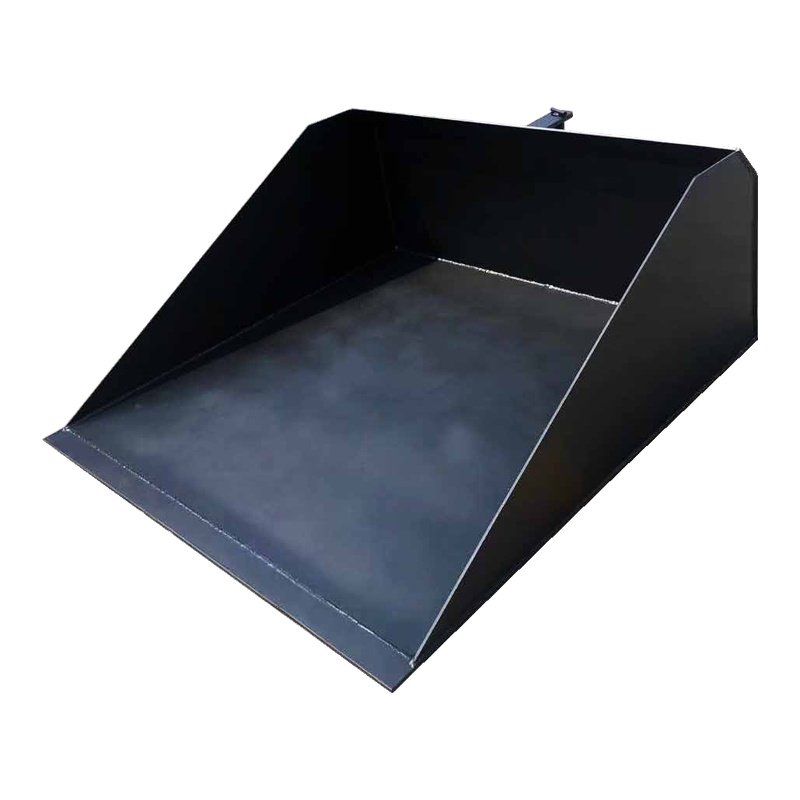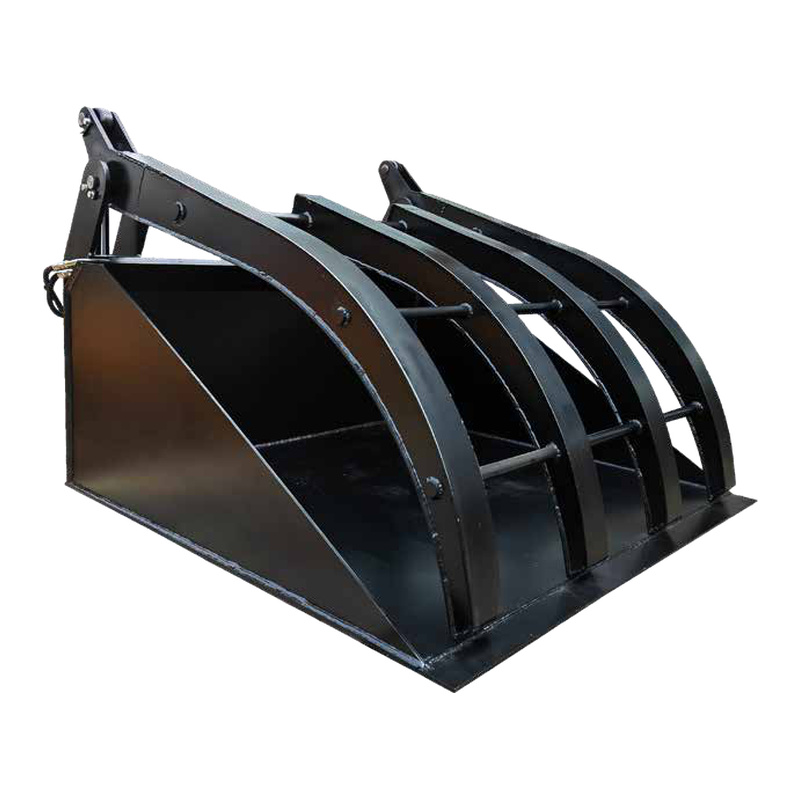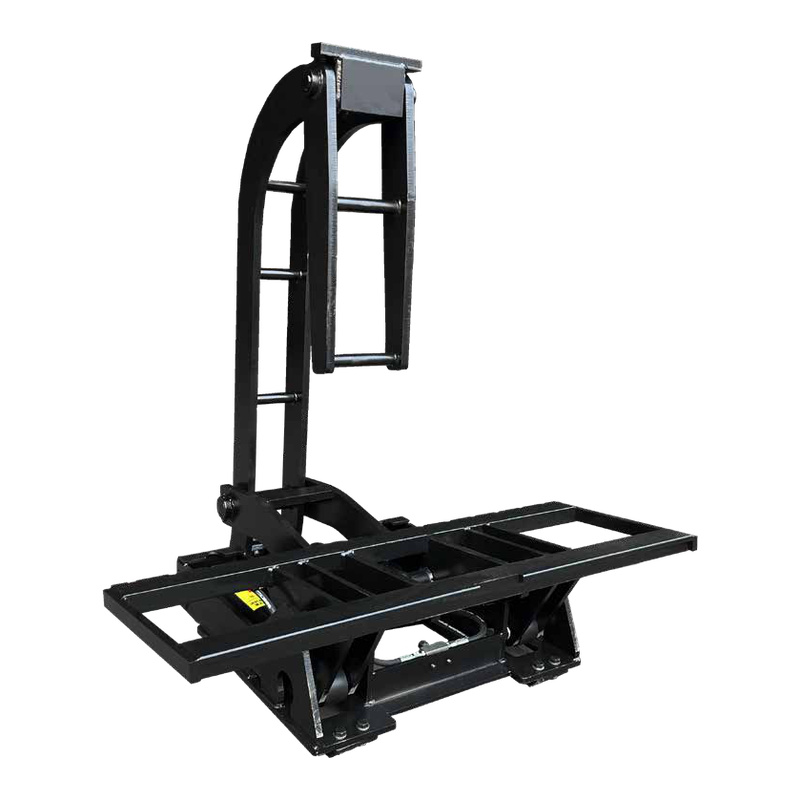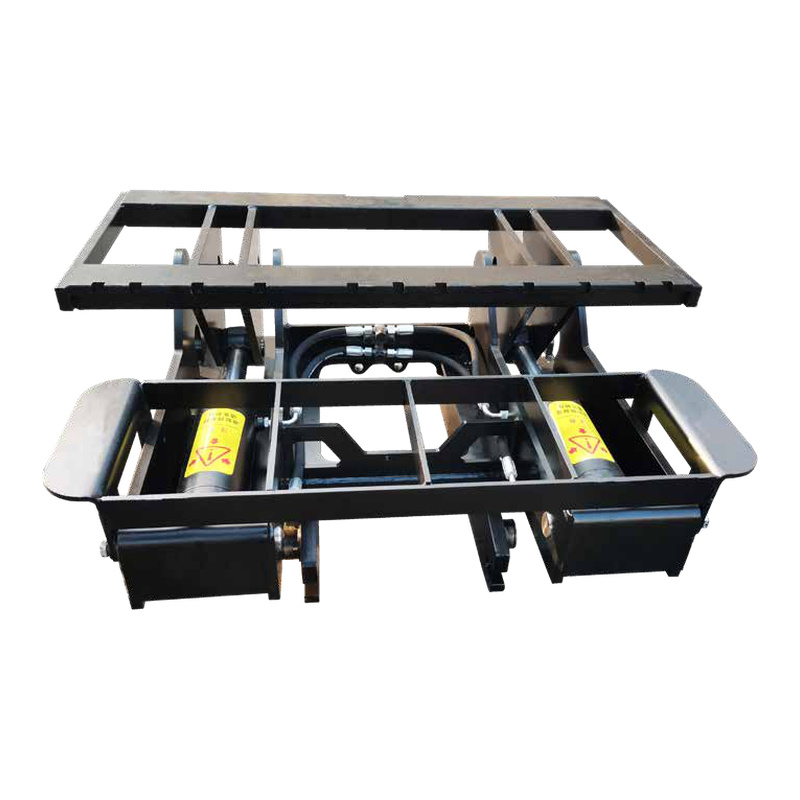
The Hinged Fork extends the operating range of a forklift by allowing the fork carriage to tilt forward and backward during loading and unloading. When equipped with a bucket or grapple bucket, this forklift tipping attachment can shovel, transport, and discharge loose materials such as sand, coal, grain, fertilizer, soil, and broken bricks. Its hydraulic tilting structure supports construction, agriculture, recycling, warehousing, and industrial bulk handling. As a reliable forklift attachment manufacturer, we support equipment matching, customized configurations, and global bulk supply.

| Model | Parameter | |
| Beam length (mm) | 1100 | Customizable |
| Width of crossbeam (mm) | 505 | \ |
| Capacity / Center of load (kg/mm) | 3000/330 | 2000\3000\4000\5000 Customizable |
| Sheet thickness (mm) | 16 | \ |
| Length / Width / Height (mm) | 921/1100/356 | \ |
| Self-weight (kg) | 326 | |
| Color | Black | Customizable |
1. Adjustable Fork Angle for Irregular Loads
Hinged Fork allows the fork position to adapt better when cargo does not sit perfectly flat. This is useful for materials with uneven bottoms, sloped contact surfaces or special handling requirements where fixed forks may not provide the best support.
2. Fork Attachment Structure for Existing Forklifts
The attachment connects with forklift forks and adds another handling function to the truck. Fork width, fork thickness, mounting position and forklift capacity should be checked before installation to ensure stable operation during lifting and movement.
3. Better Contact With Non-Standard Cargo
Standard forks work best with pallets and flat-bottom goods. Hinged Fork provides more flexibility when handling items that are difficult to position, helping operators maintain better contact between the fork surface and the load.
4. Improved Material Placement Control
During loading, unloading or stacking, small angle adjustments can make positioning easier. This is useful in applications where goods need to be placed accurately near machines, racks, production areas or storage locations.
1. Construction Material Handling
Construction materials are often irregular in shape and size. Hinged Fork can help move timber, steel components, building materials and other goods that may not sit evenly on standard forks.
2. Manufacturing Workshops
Factories handling machinery parts, fixtures, frames and production components can use the attachment for more controlled positioning. The adjustable fork movement helps when goods need careful placement near equipment.
3. Metal Fabrication Areas
Metal workshops often handle welded structures, frames and custom parts with uneven surfaces. Hinged Fork can support these handling tasks by improving contact between the forklift and the load.
4. Warehouse Transfer Operations
Warehouses with mixed cargo types may need more than standard pallet handling. Hinged Fork helps forklifts manage special loads that appear during receiving, storage movement or dispatch preparation.
5. Outdoor Material Yards
Outdoor yards often deal with uneven ground and irregular cargo shapes. The attachment helps forklifts perform more flexible handling work in areas where standard forks may not be the best choice.
Fork angle adjustment does not replace correct load handling. The forklift capacity, load center, cargo weight and lifting position still need to be considered before operation. A better contact angle helps, but the load must remain within safe operating limits.
For long or uneven goods, operators should check whether the load center moves during lifting. A stable connection between forks and cargo helps reduce shifting during transport and placement.
Before adding Hinged Fork, the forklift model and attachment connection should be confirmed. Important details include fork dimensions, hydraulic or mechanical requirements, rated lifting capacity and daily working environment.
For dealers and distributors, collecting customer forklift information before quotation helps avoid attachment mismatch. The same attachment may perform differently on forklifts with different capacities, fork sizes or working conditions.
For Hinged Fork purchasing, prepare the forklift model, fork size, average load weight, cargo type, working environment and expected handling tasks. These details help confirm attachment compatibility and ensure the final configuration matches real operating conditions.
Share your forklift information and handling requirements to receive a suitable quotation plan for warehouses, factories, construction companies, material yards and forklift attachment distributors.

 sales@neunepusi.com