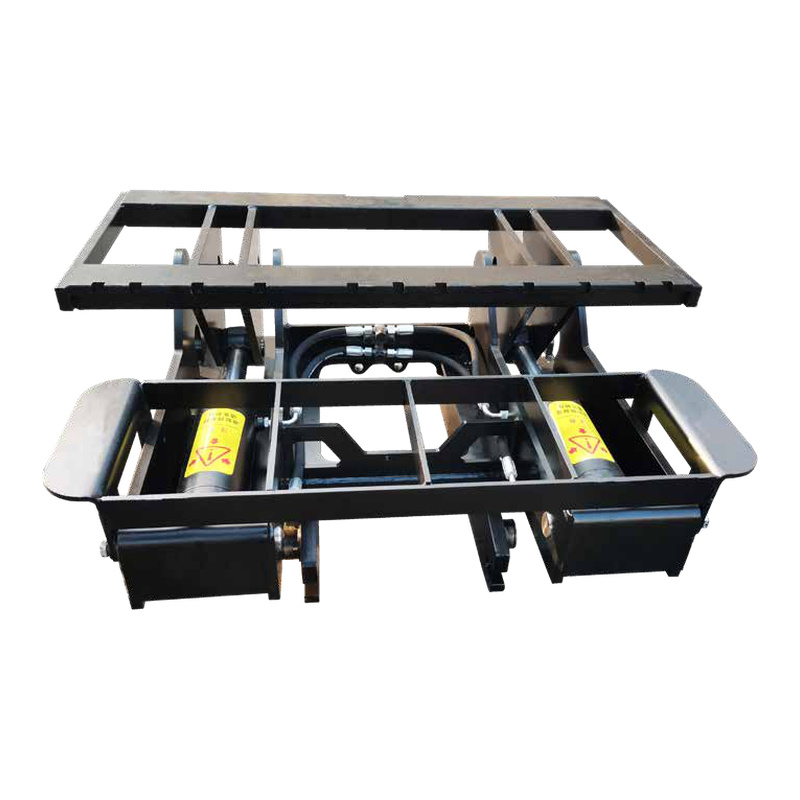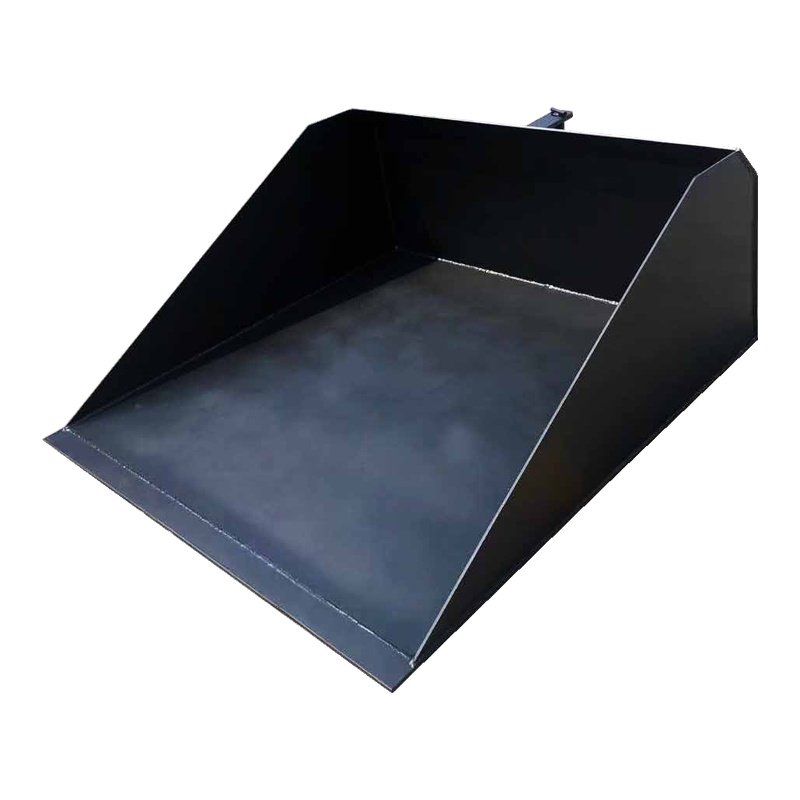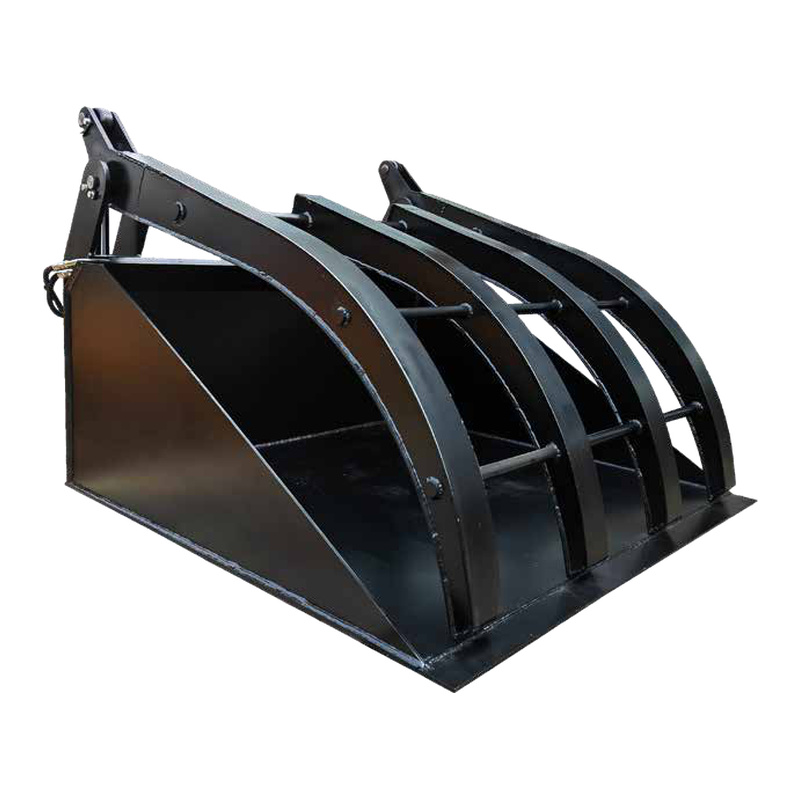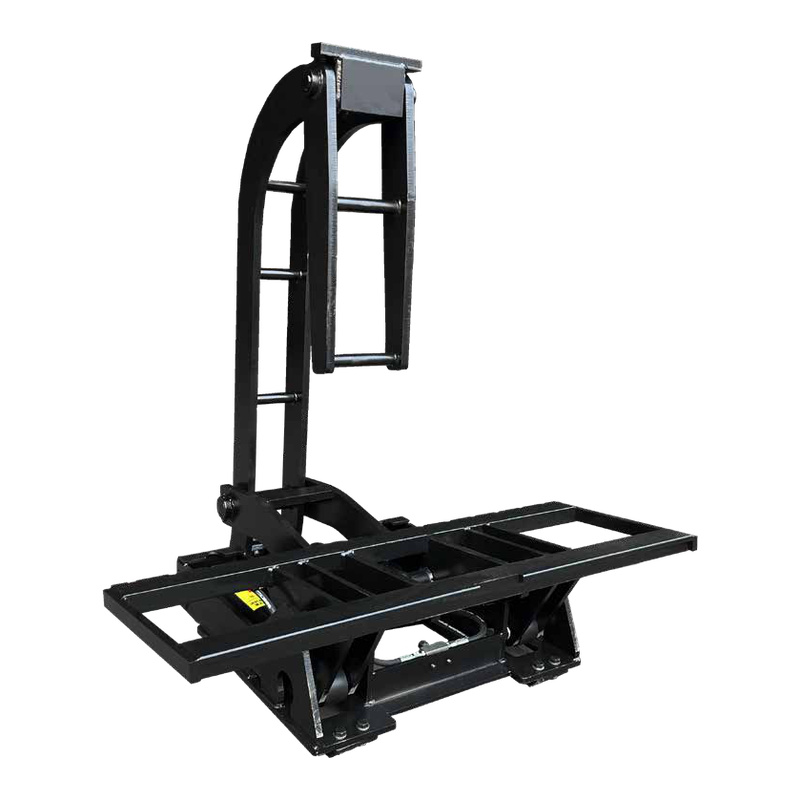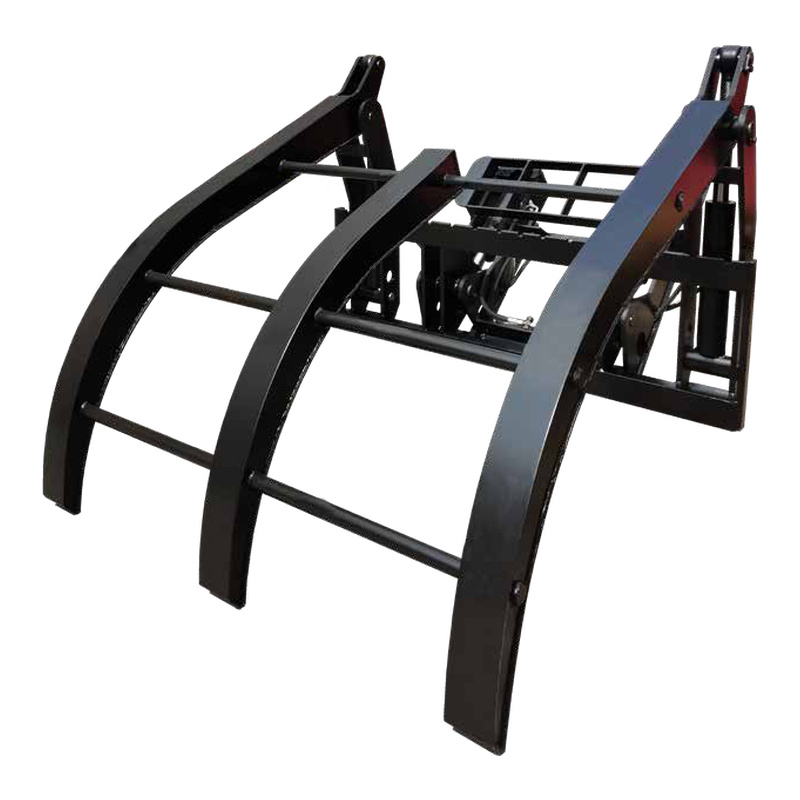
The Forklift Grapple combines hydraulic gripping and forward tipping functions to improve the loading, unloading, stacking, and transport of loose materials. When equipped with a matching bucket, this hydraulic forklift grapple can shovel and discharge sand, coal, grain, fertilizer, soil, and broken bricks. It is suitable for ports, warehouses, factories, logistics centers, construction sites, and agricultural facilities. As an experienced forklift attachment manufacturer, we support customized dimensions, load capacities, forklift matching, and global bulk supply.

| Model | Parameter | |
| Beam length (mm) | 1450 | Customizable |
| Width of crossbeam (mm) | 505 | \ |
| Capacity / Center of load (kg/mm) | 3000/330 | 2000\3000\4000\5000 Customizable |
| Sheet thickness (mm) | 16 | \ |
| Length / Width / Height (mm) | 921/1100/356 | \ |
| Self-weight (kg) | 520 | |
| Color | Black | Customizable |
1. Bucket Structure for Loose Material Loading
Forklift Bucket uses a scoop-style structure for collecting loose materials from the ground or storage piles. The bucket shape helps gather materials into one loading unit, making it easier to move bulk goods that do not have pallets, cartons or fixed lifting points.
2. Fork-Mounted Design for Existing Forklifts
The attachment connects with forklift forks, allowing existing forklifts to handle additional loading tasks. Fork size, mounting position and forklift capacity should be matched before installation to maintain stable operation during lifting and dumping.
3. Efficient Collection of Irregular Materials
Unlike standard forks that require a stable base underneath the load, Forklift Bucket works with loose and scattered materials. It can collect materials directly from the floor, pile or working area, reducing manual gathering before transportation.
4. Reinforced Structure for Daily Material Handling
The bucket structure needs to handle repeated loading, movement and dumping cycles in industrial environments. Strong side plates, reinforced edges and reliable connection points help maintain performance when handling rough materials or frequent cleanup tasks.
1. Construction Material Handling
Forklift Bucket can move sand, gravel, soil, broken blocks and other loose construction materials around job sites. It helps reduce manual loading work during cleanup, transfer and temporary storage operations.
2. Factory Waste Collection
Manufacturing facilities can use the bucket for collecting packaging waste, wood pieces, plastic scraps, metal fragments and other loose production materials. It provides a faster way to move waste from production areas to collection points.
3. Agricultural Material Transfer
Farms and agricultural storage areas can use Forklift Bucket for handling feed, grain, fertilizer, straw and other loose materials. The bucket structure makes repeated collection and unloading easier during daily operations.
4. Recycling Yard Operations
Recycling facilities often handle mixed materials that are difficult to place on pallets. Forklift Bucket helps collect and transport recyclable materials, improving the workflow between sorting areas, storage zones and transport vehicles.
5. Warehouse and Outdoor Yard Maintenance
Warehouses, factories and logistics yards can use the attachment for general cleanup tasks, loose material movement and temporary loading work. It is useful when a forklift needs to handle more than traditional palletized goods.
Many industrial materials are not delivered or stored on pallets. Loose waste, soil, gravel, agricultural products and production leftovers often need direct collection from the ground. Forklift Bucket provides a practical way to transform a forklift into a simple loading tool for these situations.
This reduces the need for additional manual tools and allows companies to use existing forklift equipment for more daily tasks. The attachment is especially valuable in workplaces where loose materials appear regularly but do not justify purchasing a separate loader.
Different materials create different loading requirements. Light materials such as packaging waste may require a different bucket size compared with heavier materials like gravel or scrap. Material density, moisture level and particle shape all affect how the bucket performs.
Before choosing a Forklift Bucket, the working material should be clearly defined. A bucket used for dry bulk materials may not perform the same way when handling wet, sticky or heavy materials.
For Forklift Bucket sourcing, prepare the forklift model, material type, average load weight, working environment, bucket size requirement and expected usage frequency. These details help match the attachment structure with the actual operation, whether the application is construction, recycling, agriculture, manufacturing or warehouse maintenance.
Share your forklift information and handling requirements to receive a suitable quotation plan for attachment supply, sample confirmation or bulk purchasing.

 sales@neunepusi.com