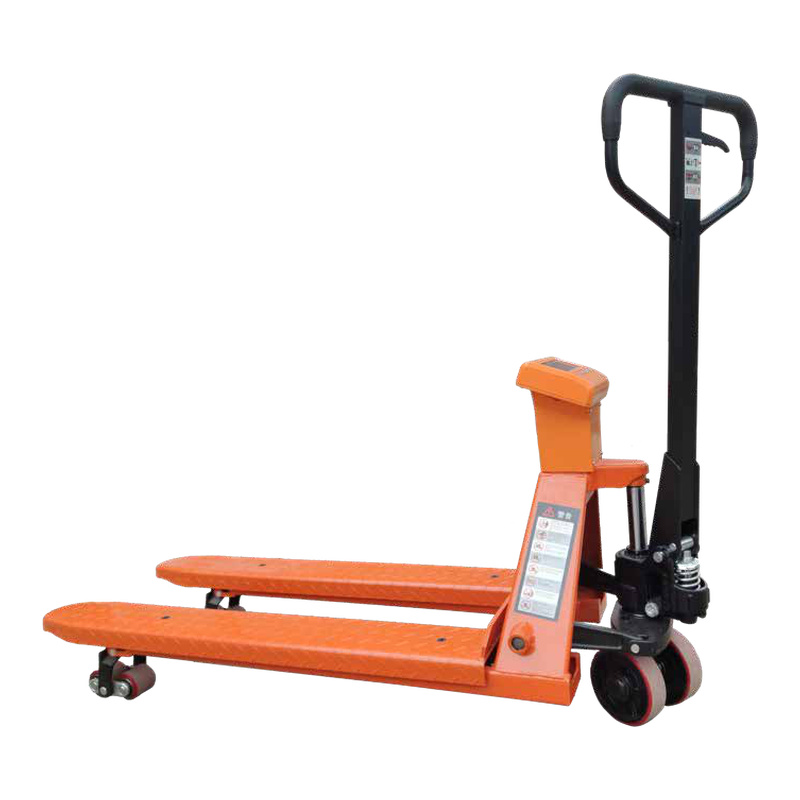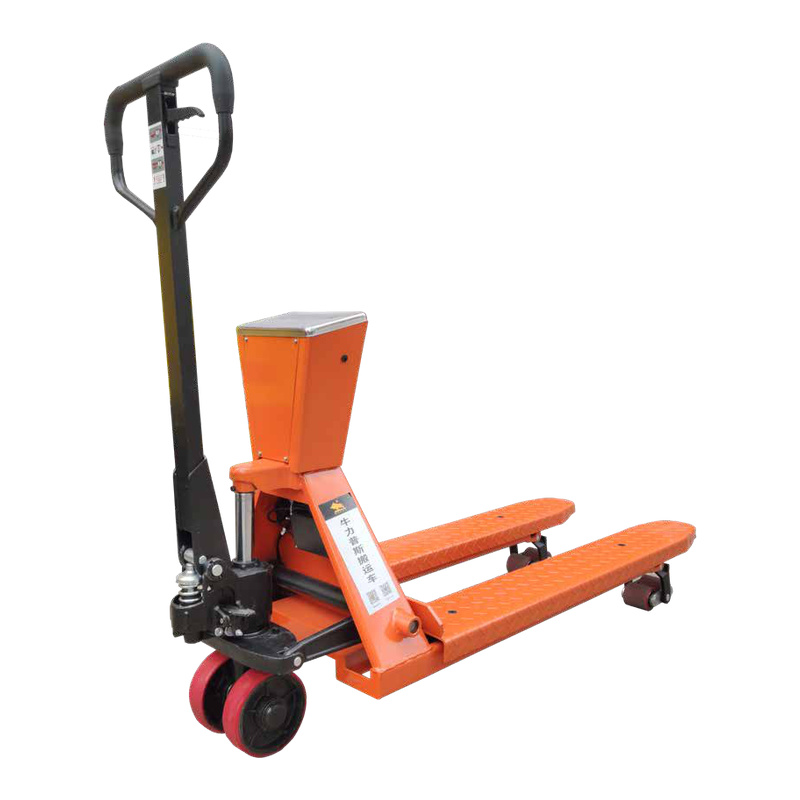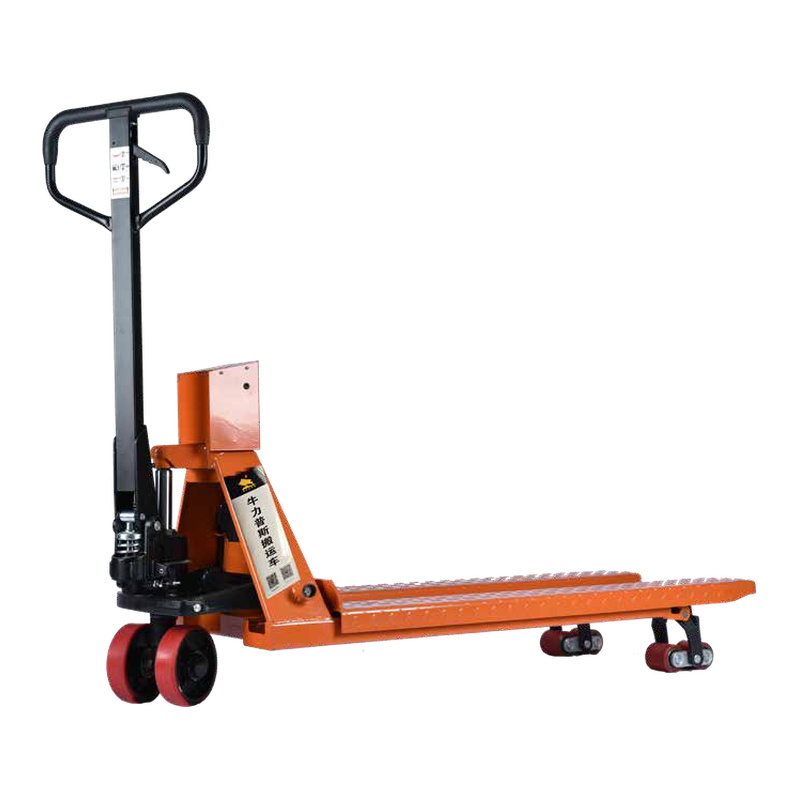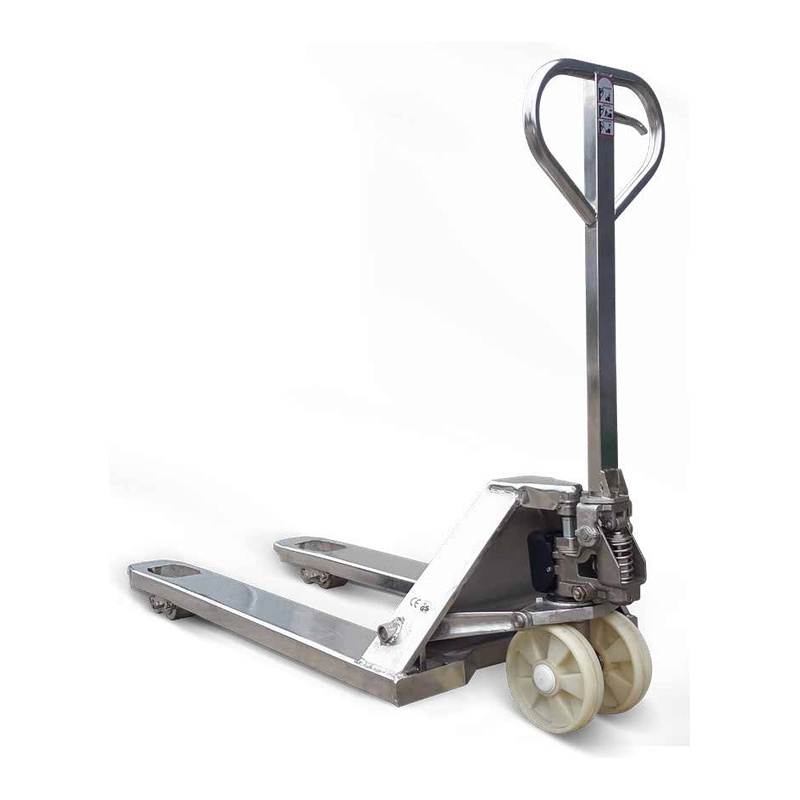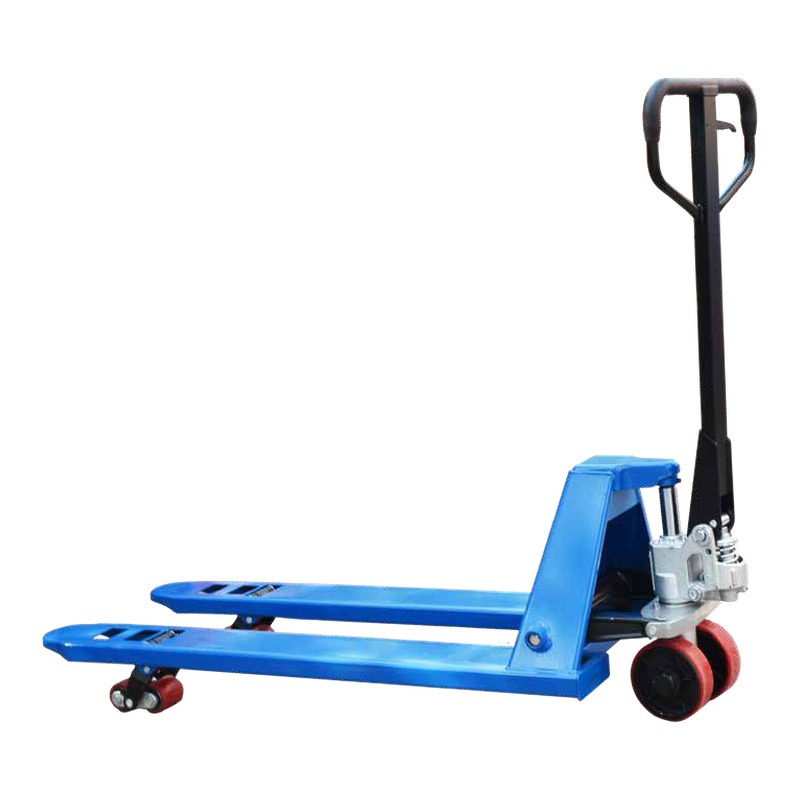
Busy facilities need handling equipment that can enter pallets quickly and turn within confined routes. The Warehouse Pallet Truck uses a manual hydraulic pump for controlled lifting, reinforced forks for regular load handling, and durable rollers for movement across warehouse floors. Its three-position control handle manages lifting, neutral travel, and lowering from one operating point. Fork length, overall width, capacity, wheel material, and lowered height can be matched to common pallet standards and site conditions.

| Model | CBY-ACL 2.0 | CBY-ACL 2.5 | CBY-ACL 3.0 |
| Capacity (kg) | 2000 | 2500 | 3000 |
| Max. fork height (mm) | 175 | ||
| Min. fork height (mm) | 65 | ||
| Fork length (mm) | 1150/1220 | ||
| Width overall forks (mm) | 550/685 | ||
| Self weight (kg) | 65-75 | ||
1. 2500kg Capacity for Warehouse Pallet Loads
The 2500kg capacity suits many common warehouse goods, including cartons, packaged products, raw materials, finished stock and shipping pallets. For warehouse equipment buyers, this capacity range works well for receiving areas, dispatch zones and stock transfer routes where goods need to be moved and weighed before storage or shipment.
2. 0.5kg Weighing Step with kg/lb Reading
The weighing system supports 0.5kg measurement steps and can read weight in kilograms or pounds. This helps warehouses working with different customer requirements, export documents or logistics standards. The keypad and automatic tare function are useful when operators need net weight after deducting pallet or packaging weight.
3. Digital Display for Faster Weight Checking
The digital scale display gives operators a direct weight reading during pallet handling. For warehouse supervisors, this helps improve checking speed during inbound inspection, outbound confirmation and inventory control, especially when many pallets pass through the same work area each day.
4. Practical Manual Handling Structure
This product keeps the familiar hand pallet truck operation while adding weighing capability. Workers can still use the handle and hydraulic lift for normal pallet movement, but they also get weight data during the same operation. This makes it easier to introduce into existing warehouse workflows without changing the whole handling process.
1. Inbound Goods Receiving
Warehouse Pallet Truck is useful when incoming pallets need to be checked against purchase orders, delivery notes or supplier documents. Workers can unload, move and weigh goods before placing them into storage.
2. Outbound Shipping Verification
Before goods leave the warehouse, the truck can help confirm pallet weight for shipping labels, freight calculation and loading preparation. This reduces the chance of weight mismatch after goods reach the carrier.
3. Inventory and Stock Control
For warehouses handling uniform goods, weighing can support stock counting and quantity checking. Instead of opening every carton, teams can use pallet weight as a reference during inventory review.
4. Factory Finished Goods Storage
Manufacturers can use this truck to move packed goods from production to storage while checking weight at the same time. It fits finished product areas where pallets are prepared for shipment or temporary storage.
5. Wholesale and Distribution Warehouses
Wholesale suppliers and distributors often handle mixed pallets from different customers or brands. A Warehouse Pallet Truck with scale helps operators check goods more quickly during sorting, dispatch and warehouse transfer.
The tare function is useful when the warehouse needs net product weight rather than total pallet weight. Operators can deduct pallet, container or packaging weight, then check the goods more clearly.
This matters in industries where cartons, drums, bags or containers are handled on pallets. For example, food ingredients, hardware goods, plastic parts, chemicals, printing materials and bulk packaged products may need weight confirmation before storage, batching or shipment.
A standard pallet truck is mainly used for movement. A Warehouse Pallet Truck with scale adds a second job: weight confirmation. This changes where the product creates value.
For simple pallet transfer, a normal hand pallet truck may be enough. For receiving, dispatch, inventory and weighing-related workflows, a scale pallet truck saves steps and reduces the need for workers to move goods back and forth between handling areas and fixed scales.
Need Warehouse Pallet Truck for receiving, dispatch, inventory checking or logistics supply? Send your load weight range, pallet size, weighing requirement, quantity and working environment, and the team can help recommend a suitable configuration for quotation, sample checking or bulk supply.

 sales@neunepusi.com