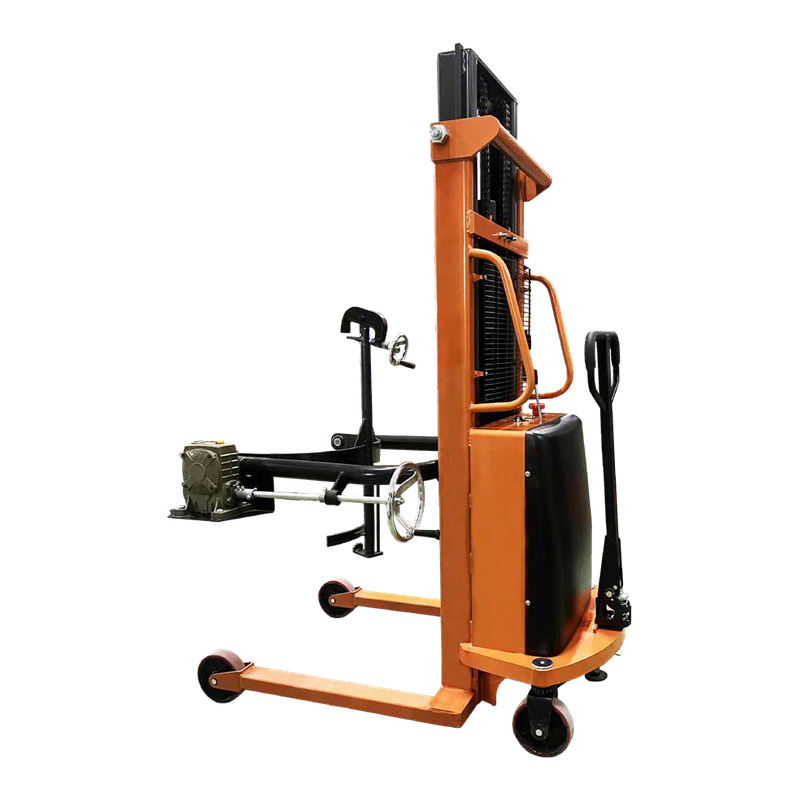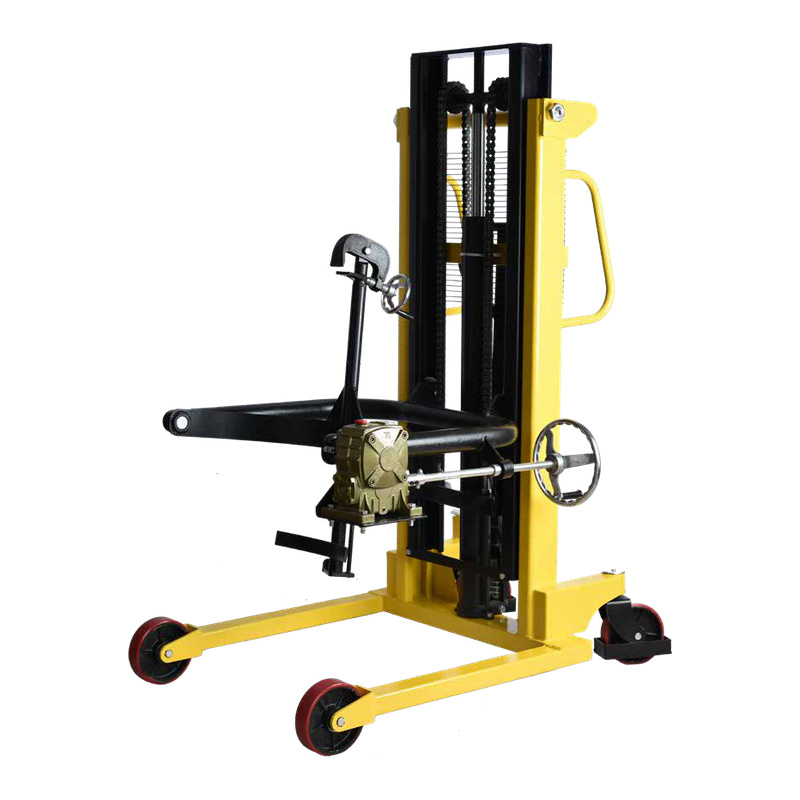
Designed for frequent drum handling, the Hydraulic Drum Lifter combines a hydraulic lifting system with a secure gripping structure that holds the container during elevation and lowering. Its mobile base allows operators to approach pallets, filling machines, storage areas, and processing equipment without using a forklift. The compact frame improves access around production lines, while the controlled lifting action helps reduce sudden load movement. We can configure the lifting height, capacity, drum clamp, wheel type, frame width, and finish according to the drum size and operating environment.
| Model | COT 0.35 |
| Load lifting Capacity (kg) | 350 |
| Lifting height (mm) | 1400/2000/2500 |
| Overall dimensions (mm) | 1210×970×2050 |
| Self weight (kg) | 155 |
1. 350kg Capacity and 1400mm Lifting Height for Drum Transfer
The 350kg lifting capacity covers many common filled or semi-filled industrial drums used in workshops, warehouses and material storage rooms. A 1400mm lifting height helps operators raise drums for pallet loading, unloading and repositioning work, especially when drums need to be moved from pallet level to another storage or handling point. The 1210 × 970 × 2050mm body size gives the lifter enough structure for drum work while still keeping it usable in indoor material handling areas.
2. Body Weight and Working Stability
A 160kg self weight gives the Hydraulic Drum Lifter a more stable handling base during drum lifting and movement. For drum equipment, self weight matters because the load is round, tall and less stable than boxed goods. The machine needs enough body support when the drum is clamped, raised and moved across the floor.
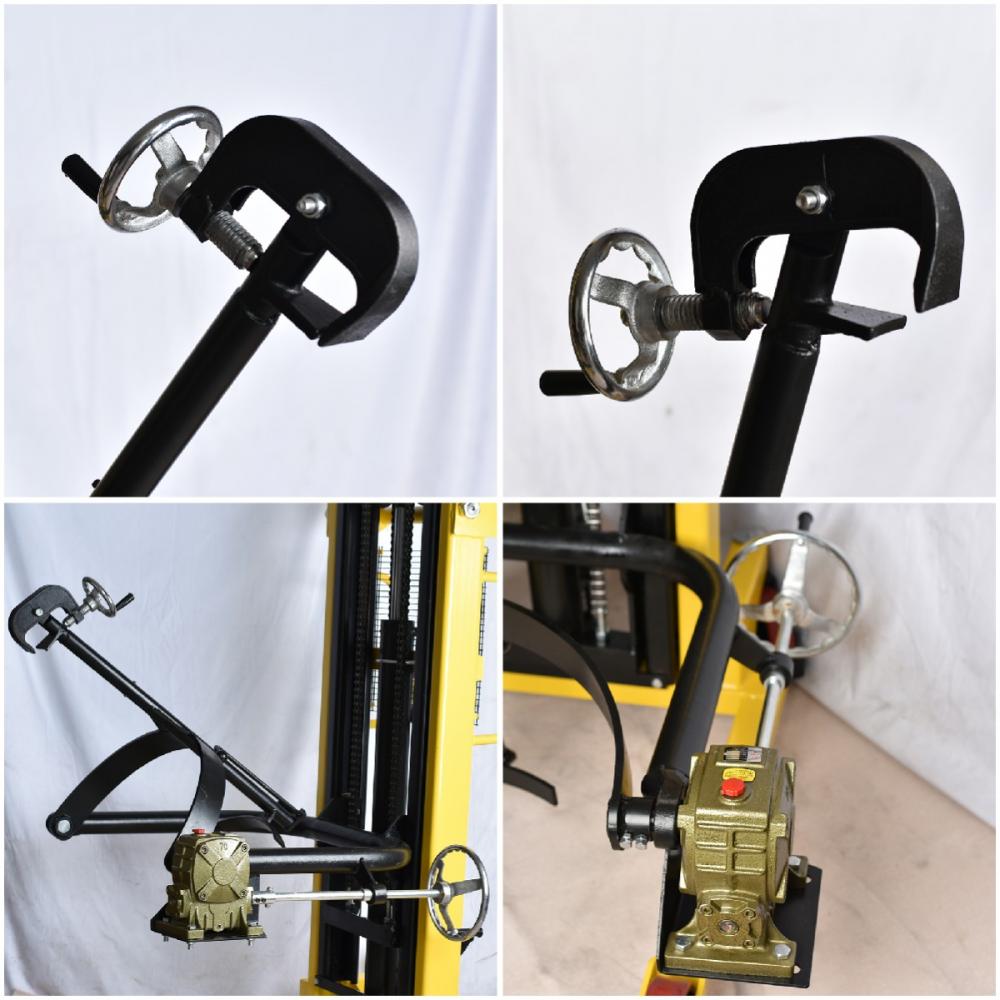
3. Spring-Loaded Clamp for Rimmed Drums
The spring-loaded clamp holds rimmed drums securely during handling. This is important because drums are not flat-bottom cartons or palletized boxes. A proper drum grip helps the operator lift and move the barrel without relying on manual holding or unsafe pulling.
4. Easier Drum Access From Pallets
The lifter can glide over pallets and grab drums from the middle of a standard pallet. This makes it useful when drums are stored closely together and workers need to remove one drum without unloading the whole pallet area.
5. Steering and Load Wheels for Positioning
Swivel steering wheels help the operator position the lifter near pallets, drums and storage points. Precision roller bearing load wheels support steadier movement when the drum is already lifted, which is useful in narrow storage aisles, production corners and loading preparation areas.
1. Oil Drum Handling
Hydraulic Drum Lifter can be used in oil storage areas, lubrication rooms and maintenance workshops where drums need to be lifted from pallets, moved to equipment areas or placed near filling and dispensing points.
2. Chemical Barrel Movement
Chemical plants and material warehouses often handle liquid-filled drums that should not be rolled or dragged across the floor. A drum lifter gives operators a more controlled way to lift and reposition barrels during storage or transfer work.
3. Warehouse Drum Storage
In warehouses that store drums on pallets, this equipment helps workers remove single drums, rearrange stock and move containers between storage zones without using a forklift for every small handling task.
4. Factory Production Support
Factories using oils, coatings, additives, cleaning liquids or production chemicals can place a Hydraulic Drum Lifter near the workshop. It helps move drums from storage to production areas when materials need to be prepared for use.
5. Loading and Unloading Around Pallets
When drums arrive on pallets, the lifter can help unload them one by one and move them to the next handling point. This is practical for facilities that do not always need a powered drum stacker but still need safer drum lifting support.
This type of lifter is best placed near drum storage zones, oil rooms, chemical material areas, production preparation spaces and loading points. It works well when drums need to be moved over short indoor routes and placed back onto pallets, floors or working positions.
It is not the same as a drum rotator or drum dumper. If the job requires pouring liquid from a drum, a tilting or rotating drum handler may be needed. If the task is mainly lifting and moving rimmed drums, this hydraulic lifter is the more direct choice.
The clamp, hydraulic lifting system, wheels and steering parts should be checked regularly. If the clamp does not grip properly, or if the lifting action becomes weak or uneven, the equipment should be inspected before further use.
Drum handling areas may contain oil, liquid residue, dust or chemical splashes. Cleaning the wheel area and checking the clamp surface can help keep daily operation smoother. For facilities using the lifter often, spare wheels and hydraulic sealing parts can be prepared for maintenance planning.
For a Hydraulic Drum Lifter quotation, provide the drum size, maximum drum weight, storage layout, lifting height requirement and purchase quantity. We can help check whether this model fits your drum handling route, then prepare pricing for factory use, dealer stock or batch supply.

 sales@neunepusi.com