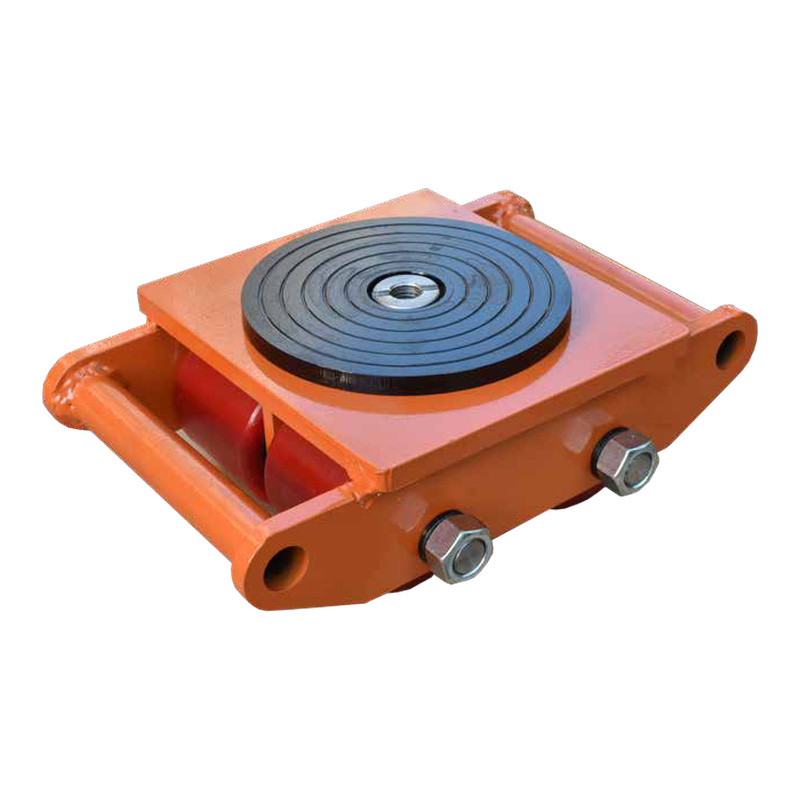
The CRA Machinery Mover is a steerable equipment-moving skate designed to replace traditional rollers during heavy machinery relocation. Its forged steel plate provides dependable load-bearing strength, while the silica gel resin wheels resist pressure, oil, and floor damage. Used together with suitable lifting jacks, this heavy duty machinery mover helps reduce manual handling time and improve equipment-moving efficiency in factories, workshops, warehouses, and installation sites. As a professional machinery mover manufacturer, we support bulk orders and international supply requirements.

| Model | CRA 6 | CRA 8 | CRA 15 | CRA 15 | CRA20 |
| Dimension(mm)(LxWxH) | 300x215x105 | 400x215x105 | 500x215x105 | 400x305x108 | 500x305x108 |
| Wheel size(mm) | 80x70 | 80x70 | 80x70 | 80x70 | 80x70 |
| Number of wheels | 4 pcs | 6 pcs | 8 pcs | 9 pcs | 12 pcs |
| wheel material | PU | PU | PU | PU | PU |
| Self weight (kg) | 13 | 19 | 24 | 27 | 36 |
1. Heavy Load Range for Machine Relocation
Machinery Mover is made for slow, controlled movement of heavy equipment rather than fast warehouse transport. Load capacity can range from 6T to 40T in heavy-duty skate systems, making it useful for machine installation, workshop relocation, equipment layout changes and factory maintenance projects. Capacity should be calculated across all skates in the set, with enough safety margin for machine weight, load center and uneven contact points.
2. PU or Steel Wheel Selection
Wheel type affects both floor protection and load movement. PU wheels are often preferred on finished concrete floors because they move more smoothly and reduce floor marking, while steel wheels are more suitable for tougher industrial environments where high pressure and abrasion resistance matter. Machinery mover specifications commonly include PU or steel wheel choices, and some heavy-duty skates use polyurethane-coated steel rollers for smoother maneuvering.
3. Low-Profile Support Under Heavy Machines
The low-height skate structure allows workers to place the mover under a machine after the equipment is lifted slightly. This is useful when the machine has little ground clearance or when the installation team needs to move equipment through factory aisles, doorways or production areas without using large lifting machinery for the whole route.
4. 360-Degree Rotation for Direction Adjustment
A rotating top plate helps the machine change direction during relocation. When moving heavy equipment, the route is rarely a straight line; workers may need to turn around columns, align with a foundation mark, or adjust the machine near a production line. A 360-degree rotation cap improves maneuverability during these slow positioning steps.
1. Factory Machine Installation
Machinery Mover helps installation teams place CNC machines, presses, lathes, packaging machines, production equipment and industrial cabinets into final working positions after unloading.
2. Workshop Layout Adjustment
Factories can use machine moving skates when production lines are rearranged, equipment is repositioned, or work cells need to be changed without moving every machine by forklift.
3. Maintenance and Equipment Repair
Maintenance teams can shift machines away from walls, service areas or fixed production points to create repair space, inspect the machine base or access hidden parts.
4. Warehouse Heavy Equipment Transfer
Warehouses and machinery storage companies can use movers for short-distance rolling of heavy equipment that does not have pallet bases or forklift pockets.
5. Machinery Dealer and Rigging Service Work
Equipment dealers, rigging teams and installation contractors can keep Machinery Mover sets for customer delivery, showroom rearrangement, machine commissioning and on-site relocation projects.
PU wheels help reduce noise and floor marking when machines are moved inside finished workshops, assembly plants or warehouses. They are useful when the floor surface must be protected during machine installation or showroom equipment movement.
For heavy loads, wheel contact pressure should still be checked. Even PU wheels can leave marks or cause floor stress if the machine weight is concentrated on too few rollers. Buyers should match wheel type with machine weight, floor hardness and movement frequency.
Steel wheels are often used when high pressure resistance is more important than floor protection. They can suit rougher industrial environments, heavy machinery routes or sites where floor marking is less of a concern.
Steel wheels should be used carefully on finished floors, coated floors or soft surfaces. They may require steel plates or a prepared moving path to protect the floor and keep the load moving smoothly.
For Machinery Mover selection, prepare the machine weight, base size, number of contact points, moving distance, floor condition, turning space and final placement accuracy requirement. These details help confirm load capacity, wheel type, skate quantity and steering method before quotation, especially for factory relocation, equipment installation, maintenance service, machinery dealers or rigging contractors.

 sales@neunepusi.com