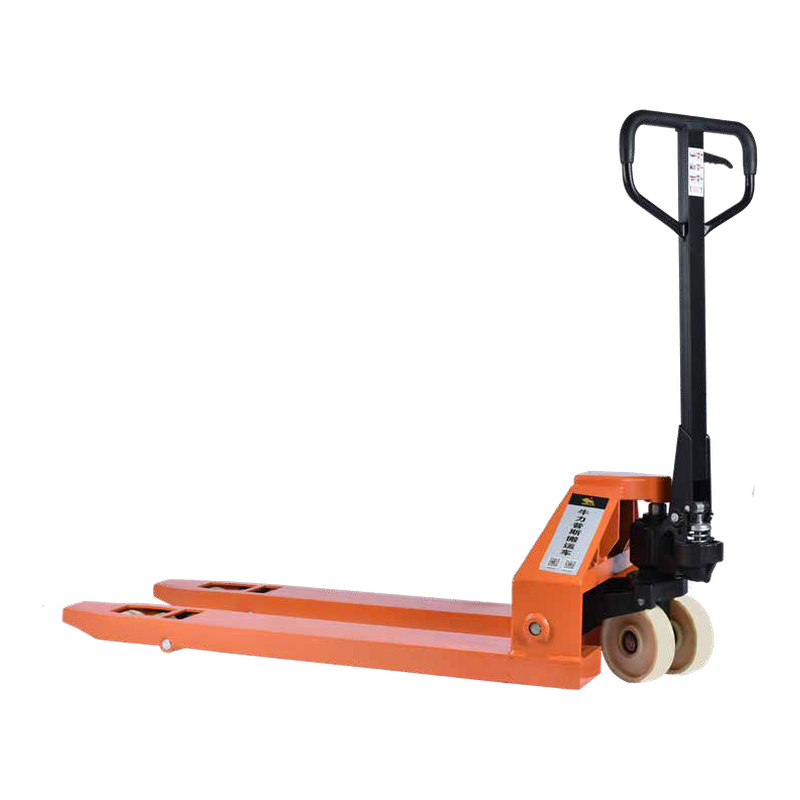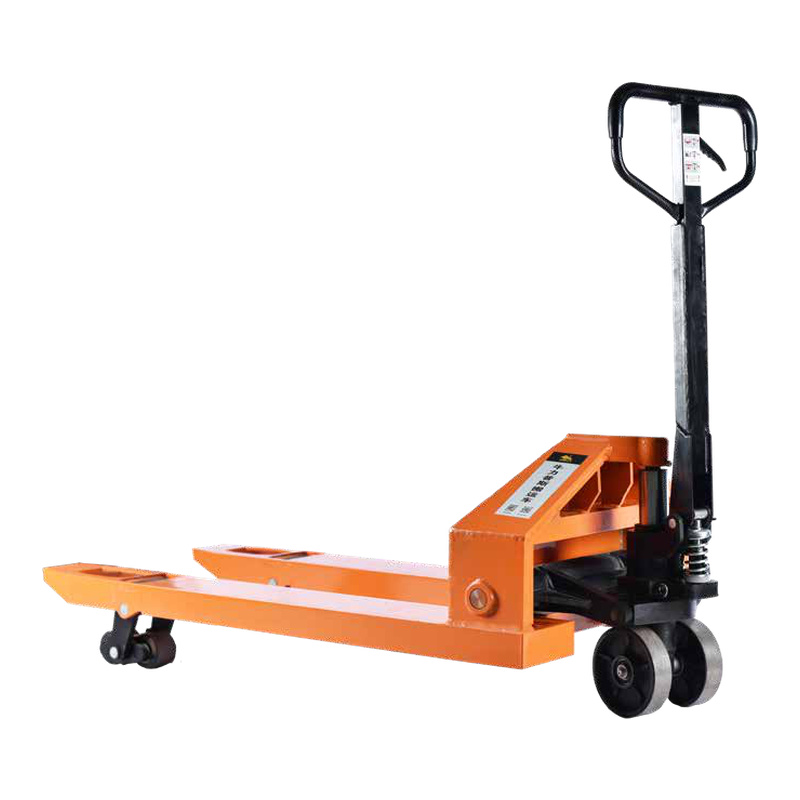
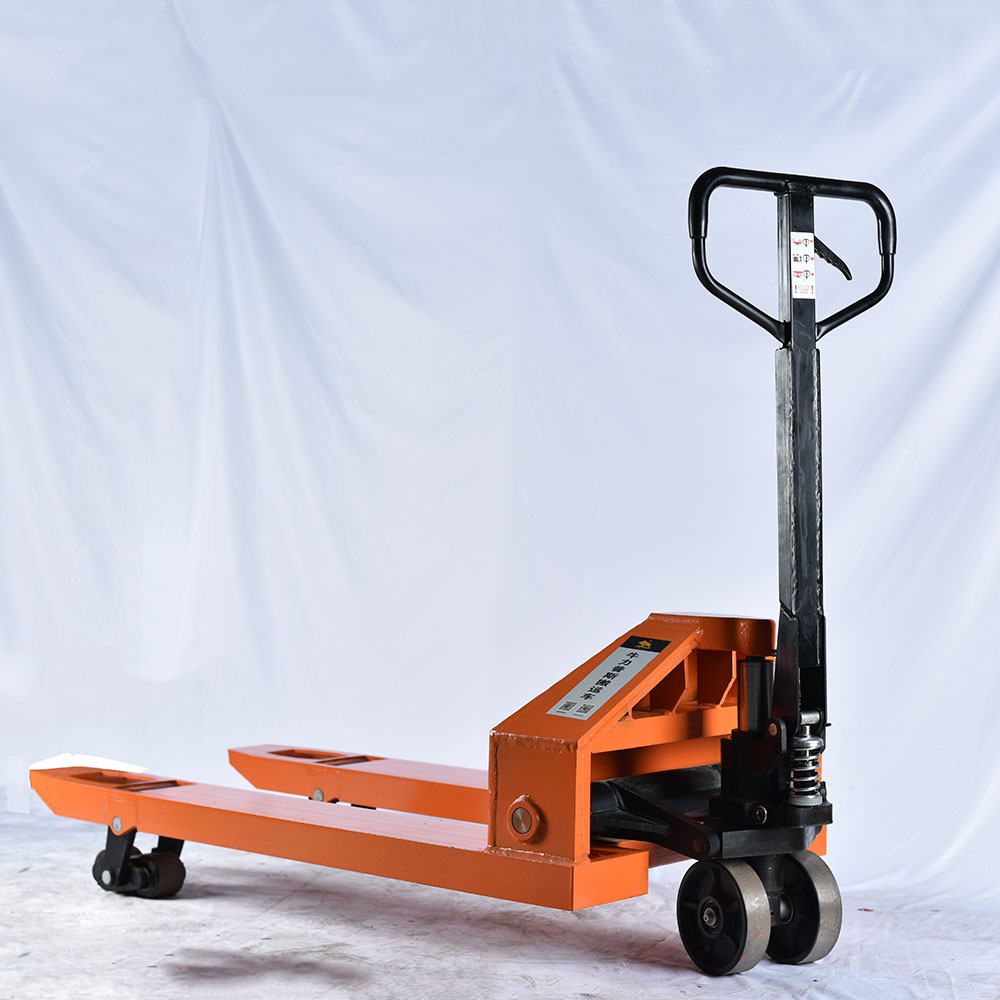
Standard-height forks can be unsuitable for low-entry pallets, compact skids, and specialized load bases. The Low Profile Pallet Truck solves this problem with a lowered fork profile, manual hydraulic lifting, and controlled steering for short transport routes. Its reinforced fork frame supports routine material movement, while the load rollers help the truck enter and leave pallets smoothly. Operators can use it around production machinery, storage racks, dispatch zones, and loading areas. Fork length, overall width, capacity, wheel material, and minimum entry height can be selected for different pallet formats.
| Model | CBY-10 Ton |
| Capacity (kg) | 10000 |
| Max. height (mm) | 190 |
| Min. height (mm) | 90 |
| Fork length (mm) | 1150/1220 |
| Width overall forks (mm) | 550/685 |
| Self weight (kg) | 250/261 |
1. Printing and Paper Product Handling
Printing factories and paper product warehouses often use low skids or compact pallets for stacked paper, cartons, packaging sheets and printed materials. Low-profile forks can help move these loads without damaging the bottom support.
2. Packaging and Export Goods Workshops
Export packaging sometimes uses low wooden bases or special crate structures to save space. Low Profile Pallet Truck can help move these goods from packing lines to inspection areas, storage points or loading zones.
3. Manufacturing Plants with Custom Pallets
Some production plants use custom pallets for parts, metal components, plastic products or semi-finished goods. When the pallet gap is lower than usual, this truck gives workers a more practical way to move the load safely.
4. Retail and Backroom Storage
Retail stockrooms may receive goods on different pallet types from different suppliers. A low-profile pallet truck helps staff handle shipments that cannot be moved smoothly by a standard hand pallet jack.
5. Low-Clearance Warehouse Operations
Warehouses with mixed pallet sources can keep this truck as a dedicated tool for low-entry loads. It is especially useful when a small percentage of goods causes repeated handling problems with standard equipment.
Fork height is easy to overlook until a pallet truck cannot enter the pallet. When the fork is too high, operators may push harder, tilt the pallet, lift one side by hand or change equipment. All of these actions waste time and increase risk.
A Low Profile Pallet Truck solves this problem at the entry point. Instead of changing the pallet or repacking the goods, workers can use lower forks that are closer to the actual pallet opening. For busy facilities, this can make special-load handling more predictable.
Low-profile trucks are best used for low-clearance pallets. For normal pallets with enough bottom space, a standard hand pallet truck may still be the better daily option because it usually has larger wheels and more general use range.
This is why many distributors and warehouses keep low-profile trucks as a special-purpose model. Standard trucks handle common goods, while low-profile trucks handle pallets that ordinary forks cannot enter.
Need Low Profile Pallet Truck for low-clearance pallets, export packaging, printing materials or special warehouse handling? Send your pallet opening height, load weight, fork size requirement, wheel preference and order quantity, and the team can help recommend a suitable configuration for quotation, sample checking or bulk supply.

 sales@neunepusi.com