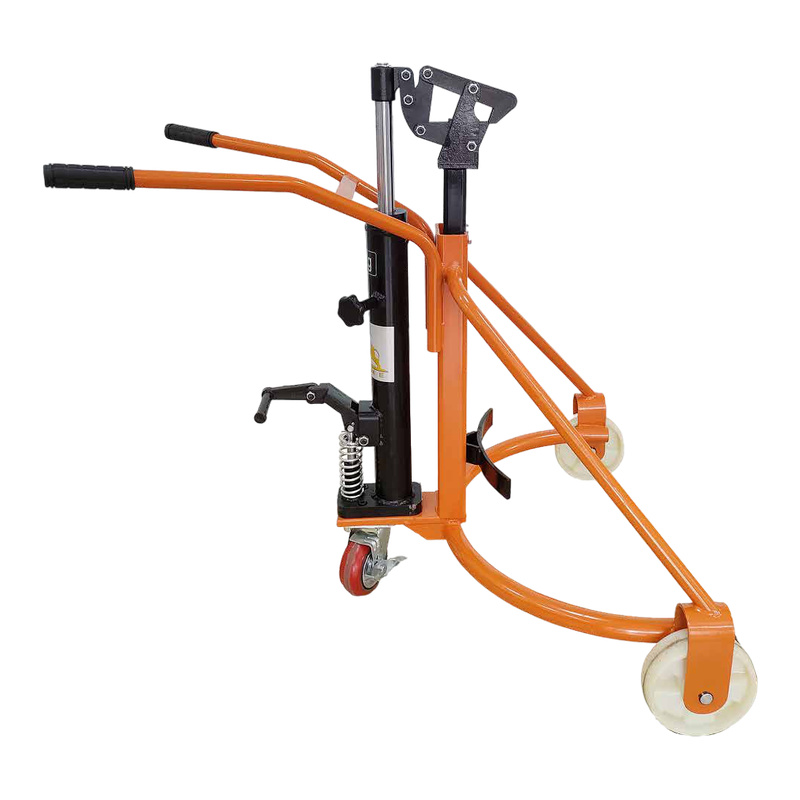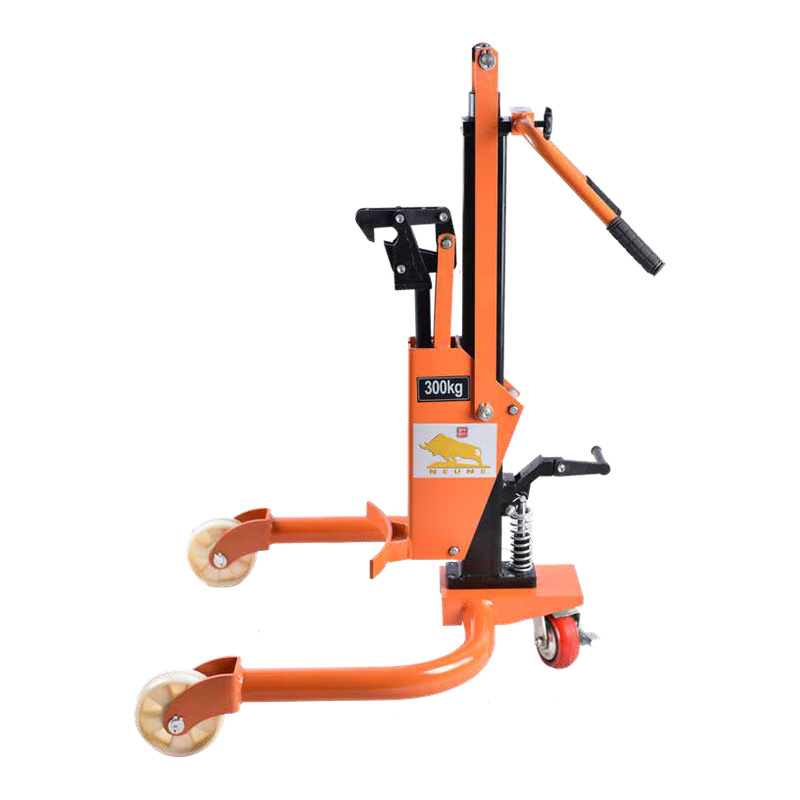
Drums can be loaded by guiding the frame beneath the container and securing it against the support structure. Once tilted, the Oil Drum Truck balances the load over its wheels, reducing the force needed during short-distance transport. The compact body works well around machinery, storage corners, and narrow service routes. As the manufacturer, we can modify the frame size, wheel material, gripping design, load rating, and surface treatment to match different drum types and workplace conditions.
| Model | YTC 0.3 A |
| Load lifting Capacity (kg) | 300 |
| Lifting height (mm) | 400 |
| Overall dimensions (mm) | 980×850×1200 |
| Self weight (kg) | 55 |
1. 300kg Drum Capacity for Industrial Barrel Handling
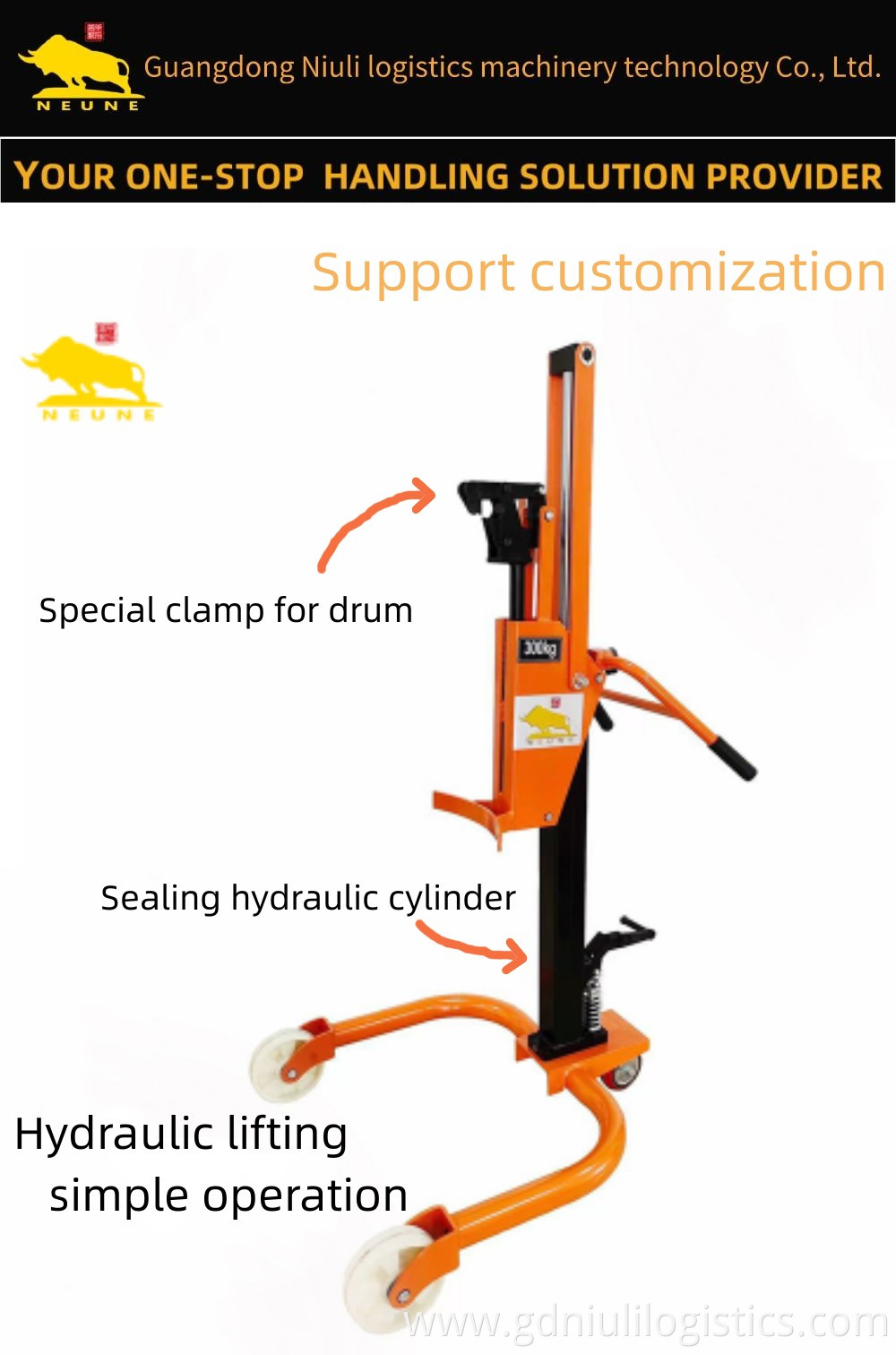
The 300kg capacity is suitable for many common oil drums, lubricant barrels, ink drums, coating drums and chemical containers. Compared with moving barrels manually, Oil Drum Truck gives operators a more controlled way to lift and transport a single drum, especially when the drum is filled with liquid and weight balance is less stable.
2. Two Lift Heights for Different Handling Needs
YTC 0.3A provides 400mm maximum lifting height, which is better for drum movement where extra clearance or pallet-level adjustment is needed. YTC 0.3B provides 200mm maximum lifting height, making it practical for short transfer and floor-level drum movement. The two models also differ in overall size and self weight, allowing buyers to match the truck to storage space, working route and daily handling frequency.
3. Steel Frame Support for Round Drum Loads
The frame structure should carry the drum from stable contact points instead of relying only on manual force. A well-supported steel frame helps control the drum body during movement, especially when the load is round, tall and easier to shift than boxed goods. This structure is important for oil rooms, workshops and warehouse corners where drums are moved repeatedly.
4. Hydraulic Lifting for Smoother Drum Pickup
The hydraulic lifting system helps raise the drum with less manual effort than direct tilting or dragging. This is useful when workers need to pick up a drum from the floor, move it across a short route, or adjust its height near pallets and storage areas. Stable lifting also helps reduce sudden load movement.
1. Oil and Lubricant Warehouses
Oil Drum Truck can be used for moving lubricant drums from storage areas to maintenance points, filling areas or production support zones. It helps workers handle single barrels without rolling them across the floor.
2. Printing and Ink Workshops
Printing facilities often use ink, solvent and coating materials packed in drums. This truck supports short-distance drum movement between storage, mixing and production areas while keeping handling simple and controlled.
3. Chemical Material Storage
Chemical warehouses can use the truck for repositioning barrels, moving drums for inspection, or transferring single containers between storage zones. It is useful when only one drum needs to be moved instead of a whole pallet.
4. Factory Maintenance Areas
Factories using oils, cleaning liquids or machine fluids can place an Oil Drum Truck near maintenance rooms. Workers can move drums closer to equipment areas when materials need to be used or replaced.
5. Dock and Receiving Points
At docks or receiving areas, drums may need to be shifted after unloading, inspection or temporary storage. A manual drum truck can handle small-batch barrel transfer without occupying larger lifting equipment.
For a drum truck, the frame is one of the most important parts because the load is not shaped like a carton or pallet. A drum has a curved surface and a higher center of gravity, so the truck must hold it from the correct contact area during movement.
The frame design should focus on drum support, balance and operator control. Reinforced contact areas help reduce shaking when the truck is tilted or moved. For industrial supply, buyers should pay attention to welding points, frame thickness, wheel bracket strength and whether the body structure feels stable when carrying a filled drum.
The welding quality affects long-term use more than many buyers expect. Drum trucks are often used in workshops with rough floors, oil residue and frequent turning. If welding points are weak, the frame may loosen or deform after repeated loading.
A better production process should include clean welding seams, stable alignment between the handle and drum support area, firm wheel bracket assembly and smooth hydraulic mounting. For batch purchasing, consistent assembly matters because distributors need every unit to feel the same during operation and inspection.
For Oil Drum Truck purchasing, share your drum material, filled drum weight, working floor condition, required lift height and expected order quantity. We can check whether the 400mm lift model or 200mm lift model fits your operation better, then prepare a quotation for workshop use, distributor inventory or repeated batch supply.

 sales@neunepusi.com