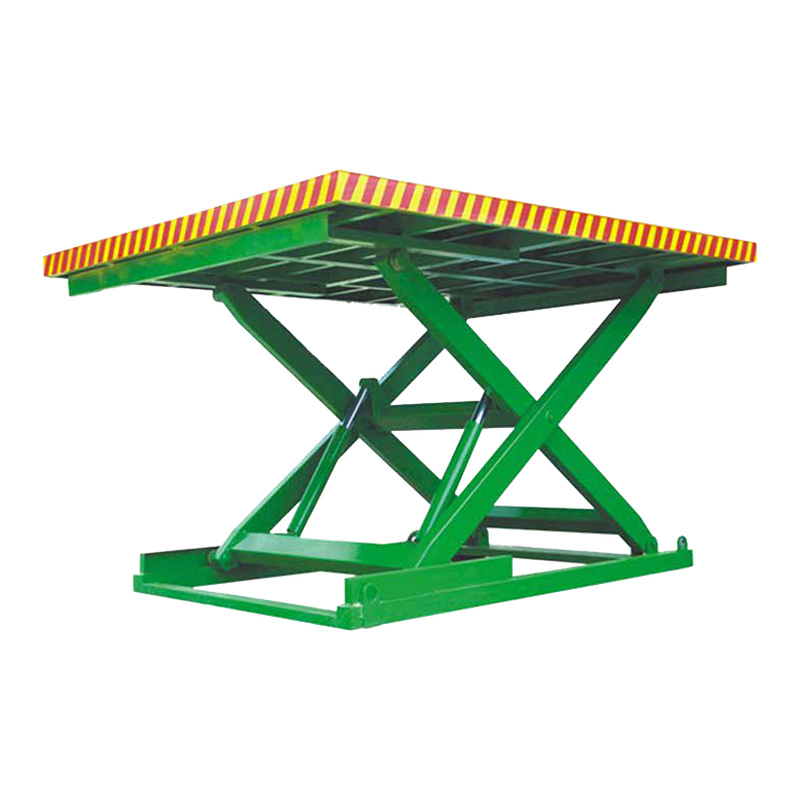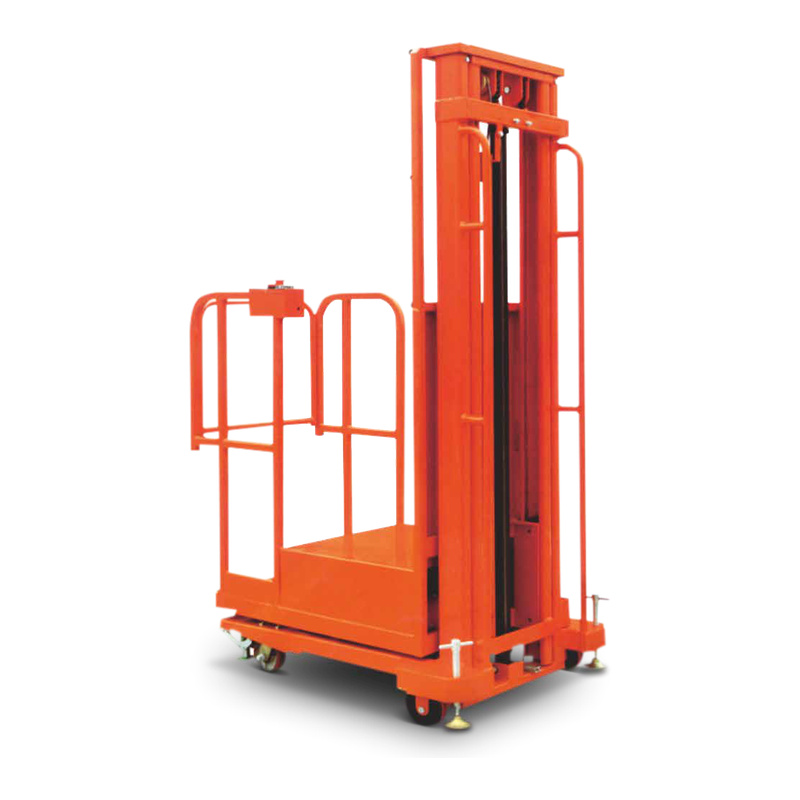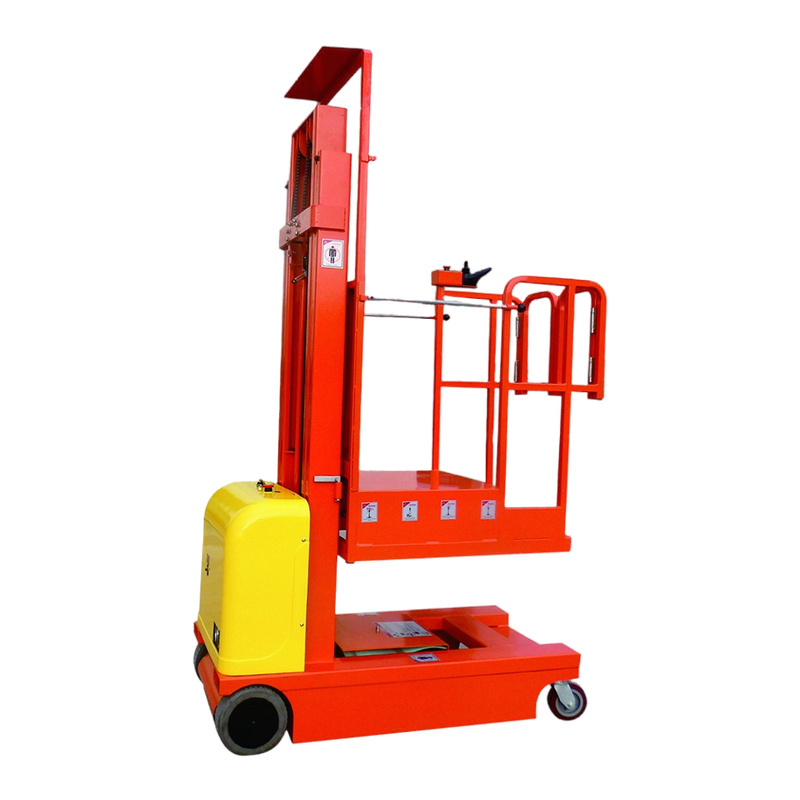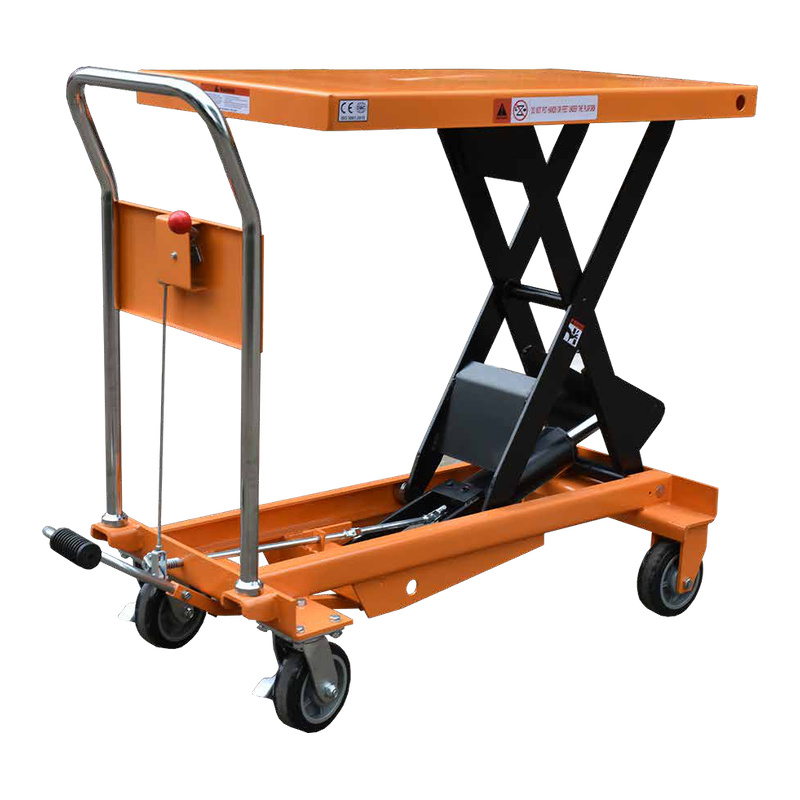
A reinforced scissor mechanism and hydraulic power unit enable Hydraulic Lift Tables to lift heavy loads through controlled vertical travel. The fixed platform can be installed above ground or within a prepared pit to match the surrounding floor level. An OEM/ODM Manufacturer can modify capacity, platform dimensions, closed height, lifting stroke, voltage, control system, and protective devices. Optional rollers, guardrails, turntables, and loading ramps support integration into Customized Material Handling layouts.
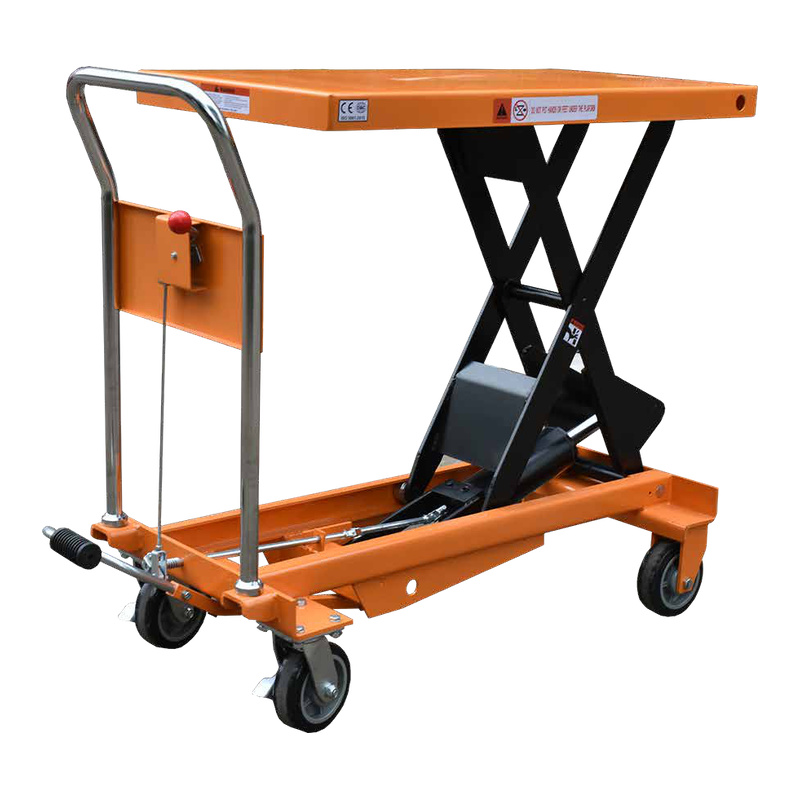
| Model | WP 300 | WP 350 | WP 500 | WP 800 |
| Capacity (kg) | 300 | 350 | 500 | 800 |
| Max. height (mm) | 900 | 1300 | 900 | 1000 |
| Min. Height (mm) | 340 | 350 | 340 | 420 |
| Lifting height (mm) | 560 | 950 | 560 | 580 |
| Platform size (mm) | 855×500×50 | 910×500×50 | 855×500×50 | 1000×510×55 |
| Distance to handle (mm) | 970 | 970 | 970 | 996 |
| Overall length (mm) | 925 | 980 | 925 | 1150 |
| Step times when lifting | ≤32/≤45 | ≤60 | ≤32/≤45 | ≤70 |
| Wheel diameter (mm) | 127 | 127 | 127 | 150 |
| Self-weight (kg) | 82 | 105 | 87 | 115 |
| Packing size (mm) | 950×530×360 | 1000×530×370 | 950×530×360 | 1160×610×440 |
1. Capacity Range for Light and Medium Material Handling
The TF series includes 150kg, 300kg, 500kg, 750kg, 1000kg, 350kg and 700kg models. Lighter models are useful for small cartons, spare parts and packaging materials, while heavier models can support denser components, tooling, molds or workshop stock. Hydraulic Lift Tables give buyers a wider selection for different workstations instead of forcing every area to use one heavy machine.
2. Working Height and Platform Size Matching
Minimum table height ranges from 220mm to 445mm, while maximum height ranges from 720mm to 1500mm depending on the model. Platform sizes include 700 × 450 × 36mm, 815 × 500mm, 850 × 500mm, 1000 × 510 × 55mm, 1016 × 510 × 55mm, 910 × 500 × 53mm and 1220 × 610mm. These sizes help match different cartons, bins, components and assembly tasks.
3. Foot Pedal Lifting for Height Adjustment
The foot pedal hydraulic design lets operators raise the table without electric power. It works well in areas where goods need frequent height adjustment but not powered travel, such as packing benches, repair stations, warehouse sorting tables and component feeding points.
4. Flat Platform for Flexible Load Placement
A flat steel table surface can hold cartons, boxes, trays, bins, tools or parts. Unlike pallet handling equipment, Hydraulic Lift Tables are more focused on raising loose goods and work materials to a usable height. This makes them useful beside machines, benches, shelves and packing lines.
5. Mobile Base for Workstation Transfer
Caster wheels allow the table to move between nearby work points. Workers can load goods in one area, push the table to another station, then raise the platform for unloading or processing. This gives small teams more flexibility without installing fixed lifting equipment at every workstation.
1. Packing and Sorting Workstations
Hydraulic Lift Tables can hold cartons, bags, trays or finished goods beside packing benches. Workers can raise the platform as the load height changes, reducing repeated bending during order preparation.
2. Assembly Line Material Feeding
Factories can use lift tables to bring components closer to assembly height. This helps operators handle parts from bins or trays more easily, especially when materials are used repeatedly during production.
3. Maintenance and Repair Tasks
Repair teams can place tools, motors, pumps, machine parts or replacement components on the table, then adjust the height near the working area. This is useful when parts are too heavy or awkward to lift directly onto a bench.
4. Warehouse Goods Transfer
For short indoor movement, a mobile lift table can transfer goods between shelves, inspection areas, packing tables and temporary storage points. It works well when loads are not palletized but still need stable movement.
5. Mold, Tooling and Component Handling
Workshops handling metal parts, tooling blocks, fixtures or machine accessories can use Hydraulic Lift Tables to reduce manual lifting during loading, inspection and repair preparation.
Hydraulic Lift Tables use a scissor structure under the platform. As the hydraulic cylinder raises the table, the scissor arms open and guide the platform upward. Arm alignment, pin connection and frame rigidity affect how steady the table feels during lifting.
For daily warehouse and workshop use, the scissor frame should rise smoothly without obvious side shaking. Buyers checking samples should pay attention to the arm plates, pivot points, shaft fit and whether the platform remains level when lifting common loads. This area decides how comfortable the table feels in real operation.
Caster wheel size ranges from 100 × 25mm to 147 × 50mm across the TF models. Larger or stronger wheels are useful when the table carries heavier loads or moves more frequently across workshop floors. Handle height ranges from 950mm to 1015mm, which affects pushing posture and control during short-distance movement.
For buyers, wheel quality is closely related to daily usability. Smooth rolling, stable turning and strong wheel brackets help workers position the table beside benches, machines and shelves. In dusty workshops, wheel areas should be easy to clean so debris does not make movement difficult.
For Hydraulic Lift Tables used in packing lines, repair areas, warehouse sorting or assembly work, share your load weight, table size requirement, target working height, floor condition and quantity plan. We can compare suitable TF models and prepare a quotation for workstation use, factory purchasing, dealer inventory or repeated batch supply.

 sales@neunepusi.com